167 Years of First Universalist
News –
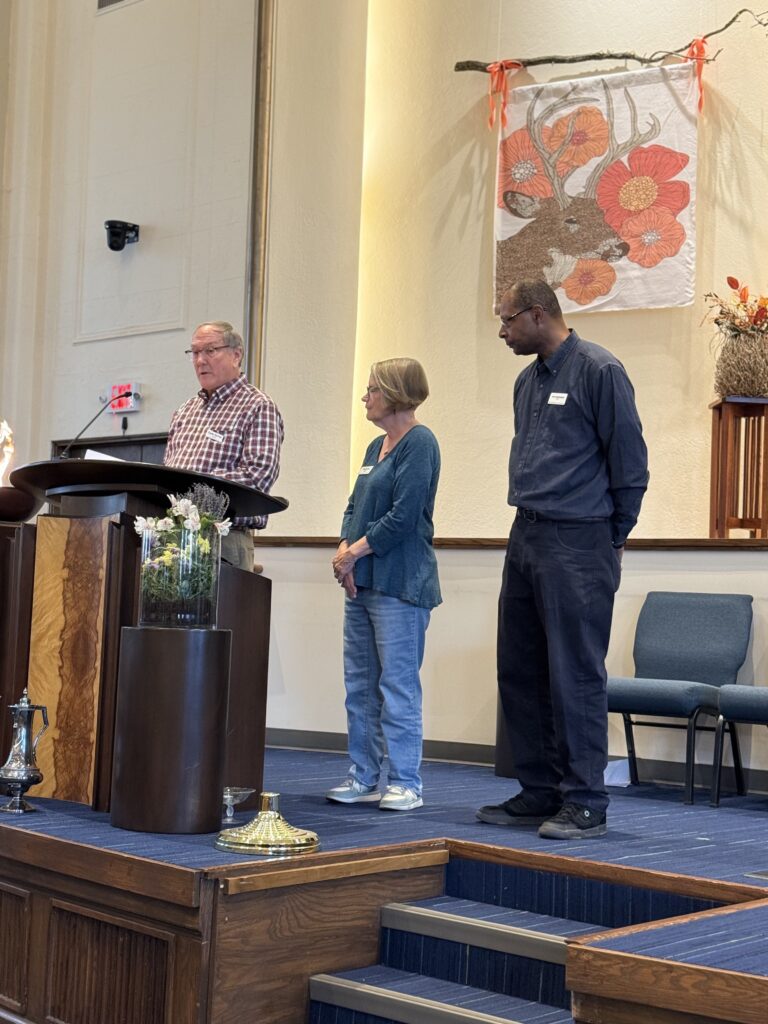
Below is the history of First U that was shared as a Reader’s Theater segment during worship on Sunday, October 25, 2026. You can find photos of First U ministers in the Cummins Room, and drawings of our buildings in the Library.
“A light on the prairie, 1859”
Long before there was our church, there were the Dakota and Ojibwe peoples who called this region home. Bdóte – the place where waters gather at the confluence of the Mississippi and Minnesota rivers, has long been a spiritual and cultural point of origin for the Dakota people. As we remember First Universalist’s history, we also honor the Indigenous peoples past and present, who call this land home.
One hundred sixty-seven years ago this week, on October 24, 1859, a small group gathered in a rented hall called the Cataract House, near the falls of St. Anthony, the corner of what now is Washington and Portland Avenues.
Minnesota had been a state for just one year. Minneapolis was barely a town.
They organized the First Universalist Society of Minneapolis, with the Reverend Joseph Willard Keyes as their minister.
The meeting was led by a young businessman named William Drew Washburn. You can see and touch the silver cup given to him in recognition of 50 years of service on the board in 1909 here on the chancel. In the pews around him sat people who would build this city: its first mayor, Dorilus Morrison; Thomas Lowry, who built the streetcar lines; the Pillsbury and Crosby milling families.
They would go on to help found our public library, our schools, our parks, our fire department, and the Institute of Arts.
They believed in a God of universal love, a God who would leave no one behind. And they set out to build a city that would reflect that faith.
“Cushions and no hell, 1866”
In 1866 the congregation finished its first church building, at Fifth Street and Fourth Avenue South. It was wooden and Gothic, it seated 400, and it held the first pipe organ in Minneapolis.
The neighbors had a name for it: “the church with cushions in the pews and no hell.”
That same year came the Reverend James Harvey Tuttle who would serve for 25 years. Tuttle believed faith should change the world, not only the soul.
He started a second congregation for working families, which became known for welcoming visibly pregnant women at a time when few churches would.
And the women of this church organized to work for social reform and for women’s right to vote. Their association continues today as the Association of Universalist Women.
“Fire and a bell tower, 1876–1889”
By 1876 the congregation had outgrown its wooden building. It built a Gothic stone church downtown at Eighth Street and Second Avenue and named it the Church of the Redeemer, although the legal name remained the First Universalist Society.
Twelve years later, in 1888, it burned. Only the bell tower, 212 feet tall, was left standing.
The congregation did not scatter. It worshipped in the Grand Opera House while it rebuilt. On November 24, 1889, it dedicated a new building, with Tiffany windows remembering the Morrison and Tuttle families.
The fire took the building. It did not take the people nor the spirit.
“Unity House and the lean years, 1891–1949”
In 1891 Tuttle’s assistant, Dr. Marion Shutter, became minister. Six years later, Marion and Mary Shutter helped open Unity House, the first settlement house in Minnesota.
There, immigrant families found child care, a kindergarten, English and citizenship classes, a free library, and help finding work. Unity House served this city for 70 years. First Universalist Foundation exists today because of the legacy of Unity House.
But the downtown church was growing old and was close to closing. Children of the founders drifted away, and the city moved south. When Dr. Shutter, 87 years old, died in office in 1939, only a handful of senior members remained.
The Reverend Carl Olson, who succeeded Shutter, sold the downtown building to the Catholic Archdiocese and promised a new beginning. The Second World War delayed it. The faithful met in a small building at 4600 Dupont Avenue South and called it the Church House.
On April 3, 1949, they opened a new red brick building at 50th and Girard. By 1963 it was home to 450 adults and 600 children.
“Marching for justice, 1963–1986”
In 1963 the Reverend Dr. John Cummins came to First Universalist from Massachusetts. Two years earlier the Universalists and Unitarians had joined as one faith, and John’s father, the Rev. Robert Cummins had helped make that union happen.
John Cummins marched with Dr. Martin Luther King Jr. in Selma. He counseled young men who refused to fight in Vietnam. He opened this church as a sanctuary for refugees from Central America.
Once, when a high school club was forbidden to hear a professor speak about communism, Cummins invited the students, their parents, and the professor to meet here instead.
His wife, Drusilla or “Dru” Cummins, fought for women’s equal place in our movement and was very active in the Unitarian Universalist Women’s Federation. John and Dru Cummins received the Unitarian Universalist Association’s Distinguished Service Award. The Cummins Room in this building carries their name.
“A house of welcome, 1990s to today”
In the 1990s, with the Reverends Terry Sweetser and Susan Milnor, the congregation grew again and needed more room. Three services and three church schools on Sunday morning pushed the Girard building to its limits.
The congregation found this building. Built in 1927, this was Adath Jeshurun Synagogue, home to one of the oldest Jewish congregations in Minneapolis. For nearly 70 years, prayers in Hebrew rose under this roof.
When Adath Jeshurun moved to Minnetonka, it sold this sacred space to us.
And our old church at 50th and Girard? Since 1994 it has been home to the Jewish congregation Shir Tikvah, the Song of Hope.
These walls have held the faith of two peoples. We are their guests as much as their owners.
From the Cataract House to 3400 Dupont Avenue South, we have worshipped in six homes, through fire, war, and hard years. The history we’ve shared this morning is just a portion of the story – through the years, the buildings and the people changed- but the promise did not: a love that leaves no one out. A story we are still learning, and writing together.